
Invited Speakers

Yunpeng
Xiao
Xi’an Jiaotong University
Speech Title: A Dispatch Analysis Method for Evaluating the Carbon Reduction Benefits of Energy Storage
Abstract: In low-carbon power system operation and dispatch
optimization, accurately evaluating the impact of energy storage on
system carbon emissions is a key issue for quantifying its low-carbon
value and supporting its market-based application. The carbon reduction
benefits of energy storage arise not only from the substitution of
high-carbon generation through temporal shifting of charging and
discharging, but also from improvements in system operating patterns
enabled by its fast response and flexible regulation capability. When
energy storage participates in system regulation, it can reduce the
inefficient operation of thermal units that would otherwise be
maintained for security reserve and regulation requirements, promote the
shutdown of high-emission marginal units or suppress their output, and
thereby generate indirect carbon reduction benefits. This
talk introduces a system dispatch analysis method for evaluating the
carbon reduction benefits of energy storage. The method first
characterizes the regulation capability that energy storage can reliably
provide under uncertain operating conditions and embeds this capability
into a multi-period power system optimal dispatch model. It then takes
system cost minimization and carbon emission reduction maximization as
joint objectives, and analyzes changes in the on/off status, output
allocation, and system emission level of thermal units before and after
energy storage integration. Accordingly, the carbon reduction benefits
of energy storage can be decomposed into several components, including
the withdrawal of units from inefficient operation, the reduction in the
number of committed thermal units, the substitution of high-carbon
output through economic dispatch, and the decrease in operational
losses. Case results show that, after energy storage participates in
system optimal operation, it can achieve coordinated improvements in
economic performance and low-carbon performance by reducing the
operation of marginal thermal units and optimizing unit commitment.
Therefore, the assessment of the carbon reduction contribution of energy
storage should not be limited to its charging and discharging energy,
but should comprehensively evaluate its low-carbon value from the
perspectives of system operation and thermal generation substitution
effects.
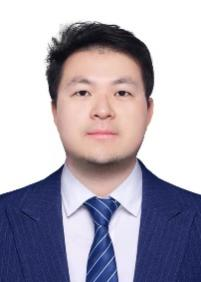
Bio: Xiao Yunpeng is an Associate Professor and Doctoral Supervisor at the School of Electrical Engineering, Xi’an Jiaotong University. He is an IEEE Senior Member, a Senior Member of the Chinese Society for Electrical Engineering (CSEE), and a Senior Member of the China Electrotechnical Society (CES). He has been recognized as a Young Top-notch Talent of Xi’an Jiaotong University. His research focuses on electricity markets and the interaction between supply and demand in power systems. To address challenges arising from the high penetration of renewable energy—such as power balance difficulties, quantification of system costs, and economic incentives for flexible resources—he has proposed methods for multi-energy resource regulation and flexibility exploitation guided by market mechanisms, analytical approaches for market decision-making behavior and game equilibrium characteristics of heterogeneous and large-scale flexible resources, electricity market clearing theories and methods that account for the strong uncertainty and low marginal cost characteristics of high renewable penetration, and optimization theories and methods for source-grid-load-storage coordinated operation under market risk constraints.
Speech Title: Exploration and Practice of Key Technologies for Zero-Carbon Park Construction
Abstract: Parks serve as the core units for industrial agglomeration and development. They are not only key carriers for driving economic growth but also major sources of carbon emissions, accounting for more than 30% of China's total carbon emissions. Therefore, parks are regarded as critical levers for implementing the dual-control carbon policy and achieving the "dual carbon" goals. In recent years, China has successively introduced a series of policies supporting the development and construction of zero-carbon parks, explicitly aiming to establish approximately 100 national-level zero-carbon parks by 2030. However, the construction of zero-carbon parks is still in its early stages, and urgent efforts are needed to explore the key enabling technologies.
This report first reviews the development background and current status of zero-carbon parks. Second, it proposes a synergistic construction pathway for zero-carbon parks based on an integrated framework of "measurement, planning, operation, and certification." Subsequently, it highlights the exploration of key technologies supporting zero-carbon park construction, including accurate carbon emission accounting and measurement technologies, low-carbon planning technologies for zero-carbon parks, low-carbon operation technologies for zero-carbon parks, and carbon emission certification technologies. On this basis, the report presents preliminary application demonstration results achieved by the team in the areas of measurement, planning, operation, and certification. Finally, it provides an outlook on future trends in the technological development of zero-carbon park construction.
Bio: Yaowang Li, Ph.D., Associate Researcher, Executive Director of the Institute of Low-Carbon Urban Energy Systems, Tsinghua Sichuan Energy Internet Research Institute. His research primarily focuses on low-carbon power system technologies. He has been selected for the Chinese Society for Electrical Engineering (CSEE) "Young Talent Support Program" and the Sichuan Province "Tianfu Emei Talent" Support Program, and has received the IEEE PCCC "Outstanding Young Engineer" award. He has led 3 vertical research projects as principal investigator, including projects funded by the National Natural Science Foundation of China (General Program and Young Scientists Fund), and has managed over 10 horizontal projects commissioned by enterprises and institutions. He has published over 70 SCI or EI indexed journal papers, 6 of which have been selected as "F5000 " top articles. One of his papers is an ESI Hot Paper, and over 10 papers have been recognized as annual best papers of their respective journals. He holds 1 authorized U.S. invention patent and over 20 authorized Chinese invention patents. As one of the top three contributors, he has received a Second Prize of Shandong Provincial Science and Technology Progress Award, a First Prize of Science and Technology Progress Award from the China Association for the Promotion of Science and Technology, and a First Prize of Innovation Award from the China Invention Association. As the lead author, he has drafted a think tank report that was submitted to the General Office of the Central Committee of the Communist Party of China. He has been interviewed and published think tank viewpoints four times in China Energy News and Southern Energy Observer. He serves as a reviewer for over 10 academic journals and has been recognized as an Outstanding Reviewer for IEEE Transactions on Power Systems and Power System Technology.
Yue Yang
Hefei University of Technology
Speech Title: Implicit Differentiation-Based Calculation of Locational Marginal Emissions in AC Optimal Power Flow
Abstract: In low-carbon power system operation and electricity market mechanism design, accurately characterizing the marginal impact of nodal load variations on total system carbon emissions is an important issue for carbon-aware dispatch and demand response. The locational marginal emission factor describes the marginal change in total carbon emissions caused by an incremental change in active power demand at a specific bus under a given power system operation model. It can be used to characterize the marginal impact of electricity consumption at different locations on system-wide carbon emissions.
This talk introduces an implicit differentiation-based method for calculating locational marginal emissions in AC optimal power flow. The proposed method defines locational marginal emission as the gradient of the optimal emission value function with respect to nodal active power demand. Around a given AC optimal power flow solution, the first-order optimality conditions are locally linearized. As a result, the calculation of all-bus locational marginal emissions can be transformed into one base AC optimal power flow solve and one sparse linear system solve, thereby avoiding the process of perturbing each bus individually and repeatedly solving nonlinear optimization problems in traditional finite-difference methods. While retaining the modeling capability of AC optimal power flow, the proposed method improves the computational efficiency, accuracy, and consistency of all-bus marginal emission signal calculation.
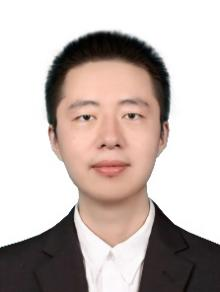
Bio: Yang Yue is an Associate Professor and Doctoral Supervisor in the School of Electrical and Automation Engineering at Hefei University of Technology. He serves as a member of the Active Distribution Network and Distributed Generation Professional Committee of the China Electrotechnical Society. His research areas include the optimization of renewable energy power systems considering uncertainties, as well as the modeling and scheduling of integrated energy systems. He has participated in various research projects, including the National Science and Technology Major Projects and the Open Fund of State Key Laboratories. He was awarded the 7th China Association for Science and Technology (CAST) Excellent Scientific Paper Award, and the First Prize in the Domestic Solver Technology Special Competition of the 2nd Energy Electronics Industry Innovation Competition.
Zelong Lu
Zhejiang University
Speech Title: A Theory of Carbon Emission Situational Awareness Considering Electricity–Carbon Consistency and Heterogeneity
Abstract: This report presents a carbon emission situational awareness theory for high-renewable power systems from the perspective of electricity–carbon consistency and heterogeneity. It first introduces the fundamental models of locational marginal carbon emission (LMCE) and locational average carbon emission (LACE) based on market-clearing sensitivity analysis, and explains how network congestion and marginal unit changes lead to spatial differentiation of nodal carbon signals. It then examines the structural relationship between locational marginal price (LMP) and LMCE, showing their consistency in system-constraint mappings and their heterogeneity in cost-driven and emission-driven marginal signals. Based on this relationship, an inverse derivation method is further introduced to estimate nodal carbon emission intensities using publicly available market price information under incomplete market data. Finally, to address non-steady-state emissions caused by frequent start-up/shutdown, deep regulation, and intertemporal constraints of thermal units under high renewable penetration, the report presents the LMCE2 model, providing theoretical support for dynamic carbon accounting, carbon-aware dispatch, and coordinated electricity–carbon regulation in new power systems.
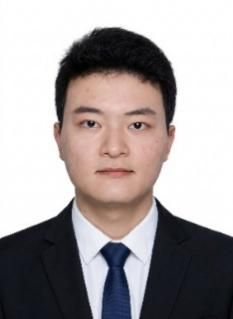
Bio: Dr. Zelong Lu is currently an Assistant Researcher at Zhejiang University and a member of Prof. Zuyi Li’s team. His research focuses on electric–carbon coupling analysis, carbon-aware power system modeling, low-carbon energy market mechanisms, and flexible resource optimization. He has published over 20 SCI/EI-indexed papers in journals such as IEEE Transactions on Power Systems, IEEE Transactions on Smart Grid, and IEEE Power Engineering Letters. He has led three national/provincial-level research projects and participated in several major programs, including the National Key R&D Program of China and NSFC projects.
Min Chen
Beijing Jiaotong University
Speech Title: Preliminary Exploration of Flexibilities in Data Centers
Abstract: With the rapid development of AI, the growing energy demand of data centers cannot be ignored. There is an urgent need to address the characteristics of computing loads, which differ from conventional loads in terms of high energy consumption, periodicity, volatility, and spatiotemporal flexibility. We must propose computing-electricity coordination methods, key technologies, software and hardware development, and demonstrations to promote the safe, reliable, low-carbon, and economical operation of computing loads driven by green power, thereby supporting high-quality development of computing power and steady progress toward the "double carbon" goals.
This report focuses on the power coordination issues of data centers, with flexibility modeling and optimization of data loads as its core. To address the unclear mechanism of spatiotemporal flexibility demand at the macro level, this report proposes fundamental demand response theories for spatiotemporal flexibility of data center loads, including aggregation modeling, scheduling, and pricing methods, revealing the essential differences from traditional temporal flexibility in supply-demand interaction. To address the technical/disciplinary barriers in flexibility mining and regulation of internal devices at the micro level, this report presents two innovative achievements: a business-centric, multi-layer hierarchical flexibility mining architecture, and flexibility mining and regulation of backup batteries. It aims to provide theoretical support for flexibility exploitation of data centers in computing-electricity coordination scenarios.
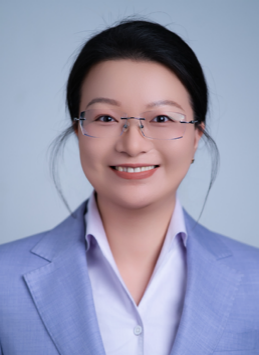
Bio: Dr. Min Chen is currently an Associate Professor in the School of Electrical Engineering at Beijing Jiaotong University. Personal Homepage: https://faculty.bjtu.edu.cn/10329/. Her main research focuses on new-type load-side regulation, with a particular emphasis on the excavation of load flexibility in computing centers under power-computing synergy scenarios. She has presided over the National Natural Science Foundation of China (NSFC) Program (rated as "Excellent" upon conclusion) and other research projects. She has published nearly 10 papers as the first author in top-tier journals of the electrical engineering field; served as the second contributor to the release of the "White Paper on Power-Computing Synergy: Reflections and Explorations (2025)", and won the First Prize of the 2025 Digital China Innovation Competition.

Linwei Sang
Southeast University
Speech Title: Implicit Differentiation-Based Calculation of Distribution Locational Marginal Emissions for Carbon Alleviation in Distribution Networks
Abstract: Driven by deep penetration of distributed energy resources and the dual-carbon targets, accurately characterizing how nodal active/reactive load variations affect total carbon emissions in distribution networks is fundamental to carbon-aware dispatch, demand response, and low-carbon market design. However, distribution networks exhibit high R/X ratios and non-negligible losses, requiring more precise power flow models such as second-order cone programming (SOCP); moreover, reactive power affects emissions indirectly through line losses, and conventional average emission factors fail to capture the temporal-spatial heterogeneity of these marginal impacts.
This talk presents a unified framework of distribution locational marginal emissions (DLMEs) for carbon alleviation in distribution networks. First, based on an SOCP day-ahead distribution scheduling model, DLMEs for both active and reactive power are rigorously formulated. Second, by leveraging implicit differentiation on the KKT optimality conditions of the SOCP, the calculation of all-bus DLMEs is reduced to one base SOCP solve plus one sparse linear-system solve, circumventing the costly per-bus perturbation of nonlinear programs used in finite-difference approaches. Finally, the implication of DLMEs for demand-side carbon-aware incentives and low-carbon distribution market mechanisms is discussed. Numerical studies show that DLME-based incentives can enhance carbon alleviation effectiveness by 10%–200% compared with average emission factors, and reveal the distinctive carbon-mitigation potential of reactive DLMEs.

Jing Huang
Sichuan University
Speech Title: Research on Incentive Mechanisms and Operation Modes of Electric Vehicles Considering Secure and Economic Operation of Distribution Networks
Abstract: With the rapid development of electric vehicles and charging facilities, the spatially and temporally concentrated integration of charging loads brings new challenges to secure and economic distribution network operation, including peak-load aggravation, voltage violations, phase imbalance, and inefficient operation. Meanwhile, vehicle-grid interaction enables electric vehicles to serve as flexible resources for distribution-level regulation. Designing effective price signals and economic compensation mechanisms while considering users’ charging preferences and multi-agent interests is therefore essential for coordinated charging and secure network operation.
This talk focuses on incentive-based coordination and operation modes of electric vehicles for secure distribution network operation. First, a non-cooperative game-based competitive charging model for electric vehicle aggregators is introduced, in which dynamic pricing and phase-balancing compensation are used to guide charging decisions. The generalized Nash equilibrium and its solution are analyzed based on variational inequality theory. Then, a generalized Nash bargaining-based coordination model between the distribution system operator and electric vehicle aggregators is presented. By quantifying flexibility contribution and cooperation dependence, the model enables fair benefit allocation and privacy-preserving distributed solution. Case studies show that the proposed methods can effectively mitigate phase imbalance, maintain voltage security, reduce operational costs, and improve the economic incentives for electric vehicles to support distribution network operation.
Bio: Jing Huang is a Lecturer in the College of Electrical Engineering at Sichuan University. She received the Ph.D. degree in Electrical Engineering from Xi’an Jiaotong University. Her research interests include planning and operation optimization of new power systems, electric vehicle scheduling, and market mechanism design. She has led one State Grid science and technology project and participated in several projects supported by the National Natural Science Foundation of China and provincial or ministerial programs. She has published more than ten journal papers, including three first-author papers in IEEE Transactions on Smart Grid, one in Electric Power Systems Research, and five EI-indexed papers including papers in Power System Technology.
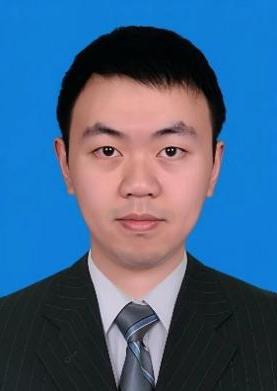
Xiaochong Dong
Tsinghua University
Speech Title: Multi-timescale Scheduling Method for New Power Systems Considering Carbon Emission Quota
Abstract: The total carbon emission management system places higher demands on the refined allocation of carbon allowances. A multi-time-scale scheduling method for new power system systems oriented toward total carbon emission control is proposed. By integrating long-term historical carbon emission guidance with short-term supply assurance carbon sensing, annual quotas are decomposed step by step down to monthly and daily scales, establishing a medium- to long-term optimized scheduling model considering quota constraints, achieving cross-season resource optimization allocation and monthly generation plans for each power source. Using long-term power generation plans as boundary conditions, a short-term optimized scheduling model considering carbon quota constraints is constructed, dynamically adjusting subsequent quota decomposition based on short-term operation results. Thus, the management of annual total carbon emissions in new power systems is realized.
Bio: Dong Xiaochong, a postdoctoral fellow at Tsinghua University, is mainly engaged in the research of power system source-charge modeling and electro-carbon collaborative scheduling, and has published more than ten academic papers in top journals in the fields of IEEE Transactions on Power Systems and IEEE Transactions on Sustainable Energy as the first author.
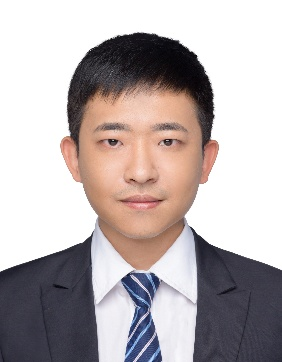
Zhenzi Song
Northeast Electric Power University
Speech Title: Wide-Area Coordinated Operation of CCUS–Renewable Energy Coupled Power Systems Toward Low-Carbon Transition
Abstract: With the advancement of the “dual-carbon” goals and the large-scale integration of renewable energy, modern power systems are facing the dual challenges of increasing renewable energy intermittency and the high carbon emissions of conventional coal-fired power units. Carbon Capture, Utilization, and Storage (CCUS) technology provides a promising pathway for the low-carbon transformation of coal-fired power plants and enables synergistic interactions between carbon utilization processes and renewable energy resources, thereby offering critical support for the low-carbon transition of new-type power systems. To address the spatiotemporal mismatch between carbon emission-intensive regions and renewable-rich areas, this report develops a wide-area coordinated operation framework for the CCUS chain, incorporating carbon capture, CO₂ pipeline transportation, and carbon resource utilization. Furthermore, a two-stage stochastic optimization model considering renewable energy uncertainty is established to systematically characterize the coupling relationship between power flow and CO₂ flow, as well as the dynamic operational characteristics of the CCUS chain. To efficiently solve the resulting large-scale mixed-integer nonlinear optimization problem, an efficient solution methodology based on polyhedral envelope linearization and Benders decomposition with hybrid cutting-plane strategies is proposed, thereby enhancing computational efficiency and scalability under complex operational scenarios.
Bio: Zhenzi Song is a lecturer at Northeast Electric Power University. His research interests mainly focus on electricity–carbon coupled operation, electricity markets and planning in power systems, as well as the integrated application of Carbon Capture, Utilization, and Storage (CCUS) technologies in energy systems. He has participated in several national-level research projects, including the National Key Research and Development Program of China and the National Science and Technology Major Project on Smart Grids. In recent years, he has published more than ten SCI-, EI-indexed, and international conference papers. He also serves as a reviewer for several internationally recognized journals, including IEEE TSG, IEEE TIA, IEEE TEMPR, Applied Energy, and IET GTD.

Hang Fan
North China Electric Power University
Speech Title: Large-Model-Driven Day-Ahead Electricity Price Forecasting: Market-Information-Aware Adaptation and Expert Fusion
Abstract: With the advancement of the “dual-carbon” goals and the large-scale integration of renewable energy, modern power systems are facing the dual challenges of increasing renewable energy intermittency and the high carbon emissions of conventional coal-fired power units. Carbon Capture, Utilization, and Storage (CCUS) technology provides a promising pathway for the low-carbon transformation of coal-fired power plants and enables synergistic interactions between carbon utilization processes and renewable energy resources, thereby offering critical support for the low-carbon transition of new-type power systems. To address the spatiotemporal mismatch between carbon emission-intensive regions and renewable-rich areas, this report develops a wide-area coordinated operation framework for the CCUS chain, incorporating carbon capture, CO₂ pipeline transportation, and carbon resource utilization. Furthermore, a two-stage stochastic optimization model considering renewable energy uncertainty is established to systematically characterize the coupling relationship between power flow and CO₂ flow, as well as the dynamic operational characteristics of the CCUS chain. To efficiently solve the resulting large-scale mixed-integer nonlinear optimization problem, an efficient solution methodology based on polyhedral envelope linearization and Benders decomposition with hybrid cutting-plane strategies is proposed, thereby enhancing computational efficiency and scalability under complex operational scenarios.
Bio: Hang Fan is a Lecturer and Master’s Supervisor at the School of Economics and Management, North China Electric Power University. He is a recipient of the 10th Young Elite Scientist Sponsorship Program of the Chinese Society for Electrical Engineering and a CFA charterholder. He received his B.Eng. degree from the College of Electrical Engineering and Information Technology, Sichuan University, and Wu Yuzhang Honors College in June 2015. He obtained his Ph.D. degree from the Department of Electrical Engineering, Tsinghua University in June 2021, under the supervision of Professor Shengwei Mei. During his doctoral studies, he was a visiting scholar at the Harvard John A. Paulson School of Engineering and Applied Sciences. He also completed the Big Data Competency Enhancement Program of the Graduate School of Tsinghua University and received the Special Scholarship. In September 2023, he completed his postdoctoral research at the PBC School of Finance, Tsinghua University, under the supervision of Professor Li Liao, Dean of the PBC School of Finance, and was jointly supervised by Professor Wei Xu from the Institute for Interdisciplinary Information Sciences, Tsinghua University. He then joined the School of Economics and Management, North China Electric Power University. His research focuses on interdisciplinary studies across electrical engineering, artificial intelligence, and finance. He has led or participated in more than ten research and technology projects related to power grids and artificial intelligence. He has published or had accepted over 40 papers in SCI/EI-indexed and core journals, been granted eight invention patents, and contributed to three academic monographs. His honors include the Second Prize in the National Artificial Intelligence Application Scenario Innovation Challenge, the National Scholarship, and the Special Scholarship in Data Science from Tsinghua University.
Speakers in 2027 to be
announced soon.....